 By
By 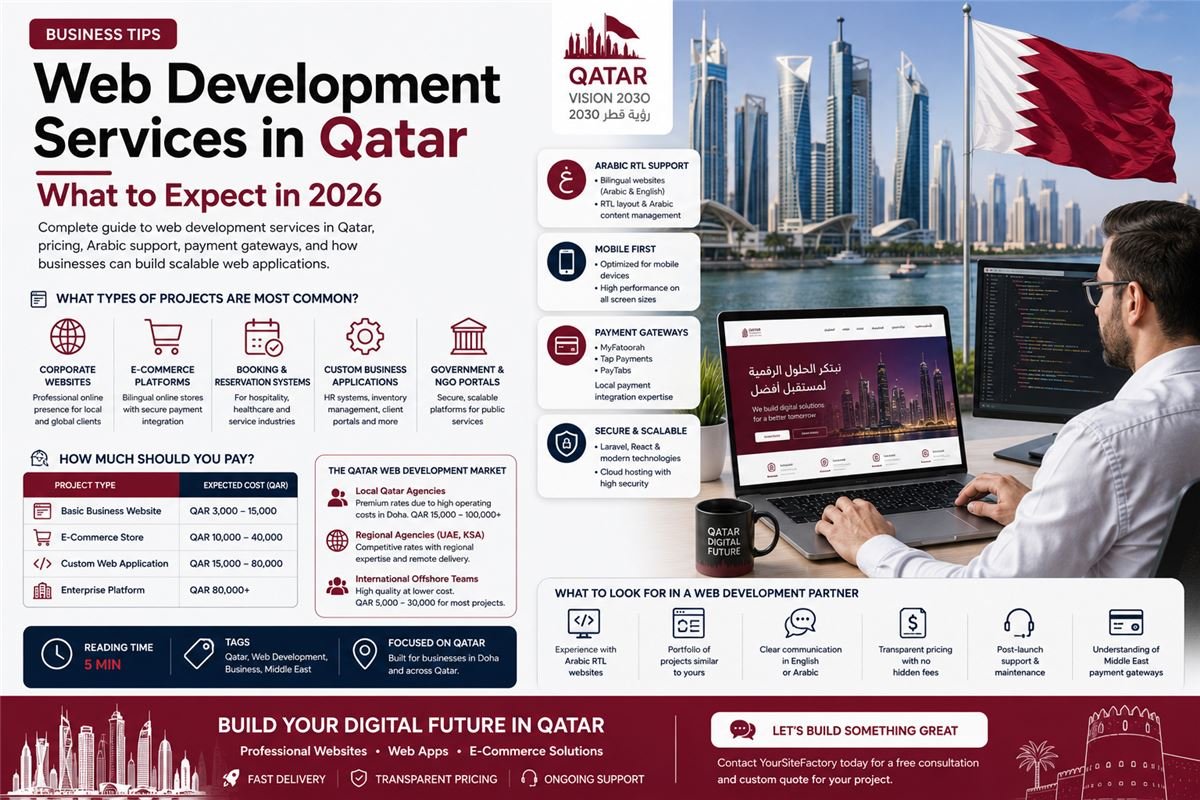
Qatar is in the middle of one of the most ambitious digital transformations in the world. Vision 2030 is pumping billions into technology infrastructure, e-government platforms, and smart city initiatives. For businesses operating in Qatar whether local companies in Doha or international firms entering the market having a professional web presence is no longer a luxury. It is the foundation of doing business.
This guide covers everything you need to know about web development services in Qatar in 2026 costs, providers, technical requirements, and how to choose the right partner.
Qatar's Digital Economy in 2026
Qatar consistently ranks among the top countries in the world for internet penetration, smartphone usage, and digital readiness. With a population that is over 97% internet-connected and one of the highest smartphone penetration rates globally, your website's mobile performance directly determines your business results.
Key drivers of web development demand in Qatar:
- Vision 2030 National digital transformation agenda driving government and private sector investment
- FIFA legacy infrastructure Technology investments made for the 2022 World Cup continue to drive digital adoption
- Young, tech-savvy population Qatar's demographic profile skews young and digitally native
- International business hub Doha is a regional headquarters for hundreds of multinational companies requiring professional digital presence
- Growing e-commerce Qatar's e-commerce market is growing at over 15% annually
The Web Development Market in Qatar
Professional web development in Qatar is handled by four types of providers:
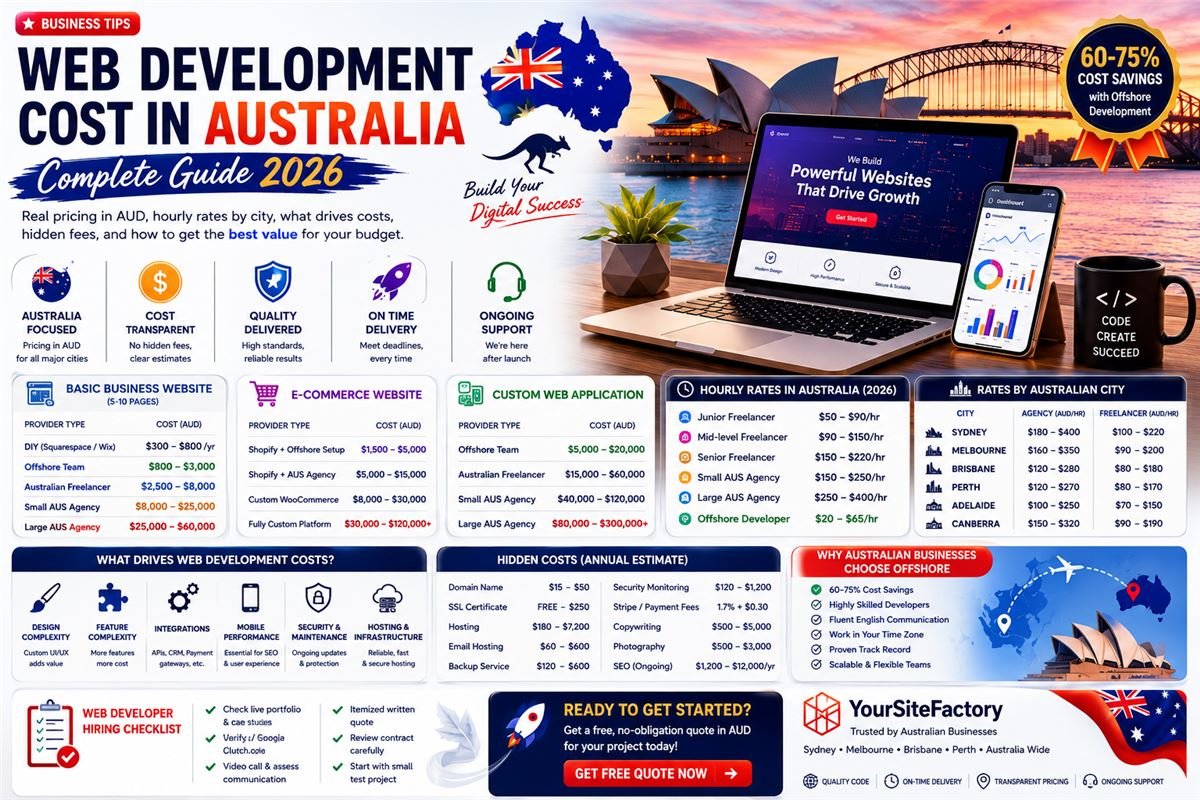
Local Qatar-based agencies: Premium rates due to high Doha operating costs. Expect QAR 15,000–QAR 150,000+ for most projects. Best for large enterprises requiring on-site collaboration and Arabic-language project management.
Regional agencies (UAE, Saudi Arabia): Competitive rates with strong regional expertise. Many Dubai-based agencies serve Qatari clients remotely. Typical cost: QAR 10,000–QAR 80,000.
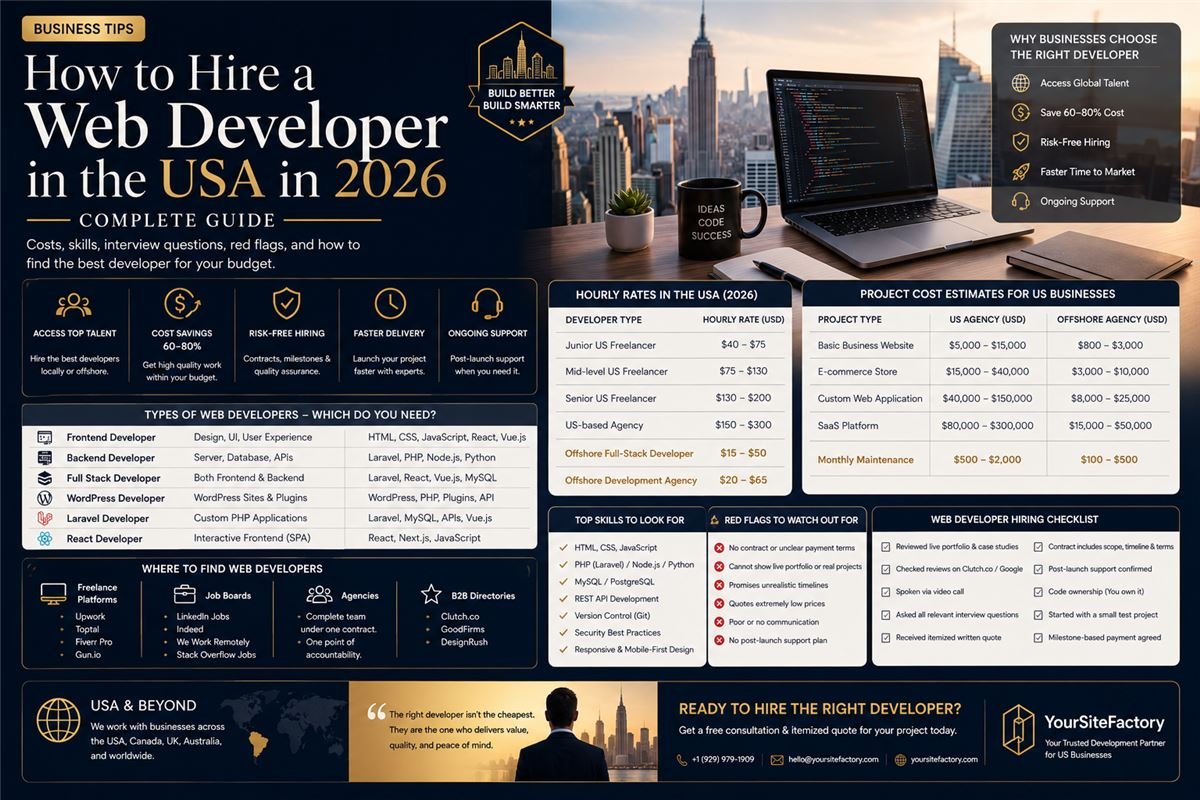
International offshore teams: Increasingly the preferred choice for Qatari businesses seeking high quality at lower cost. Teams in Pakistan, India, and Eastern Europe offer professional Laravel, React, and full-stack development at QAR 5,000–QAR 30,000. Strong English communication and experience with Middle East clients is essential.
Freelancers: Available at the lowest cost but highest risk. Suitable only for very small, well-defined projects.
How Much Does Web Development Cost in Qatar?
| Project Type | Local Agency | Regional Agency | Offshore Team |
|---|---|---|---|
| Basic business website | QAR 15,000–40,000 | QAR 8,000–20,000 | QAR 3,000–8,000 |
| E-commerce platform | QAR 40,000–100,000 | QAR 20,000–50,000 | QAR 8,000–20,000 |
| Custom web application | QAR 80,000–200,000 | QAR 40,000–100,000 | QAR 15,000–40,000 |
| Enterprise platform | QAR 200,000+ | QAR 100,000+ | QAR 40,000–80,000 |
What Types of Projects Are Most in Demand?
Qatari businesses and government entities most commonly need:
- Corporate websites: Professional multilingual online presence for local and international audiences. Arabic and English versions are standard for most serious businesses.
- E-commerce platforms: Bilingual Arabic-English online stores with Qatar-specific payment gateways and local delivery integration.
- Booking and reservation systems: Critical for Qatar's large hospitality, healthcare, and professional services sectors. Real-time availability, payment processing, and SMS confirmation are expected features.
- Custom business applications: HR portals, inventory management systems, client portals, and procurement platforms. Many government-adjacent businesses need custom software that integrates with government systems.
- Government and NGO portals: Highly secure, scalable platforms built to government specifications. Require experience with accessibility standards and Arabic language support.
- Real estate platforms: Qatar's active property market drives demand for sophisticated listing, search, and enquiry management platforms.
Critical Technical Requirements for Qatar
Arabic RTL Support
Any website targeting Qatari users must handle Arabic properly. Right-to-left layout support is not just flipping text it requires:
- Complete UI mirror for RTL layout
- Arabic-capable fonts loaded correctly
- RTL-aware CSS and flexbox/grid configurations
- Bilingual CMS so content editors can manage both languages
- Separate SEO metadata in Arabic for Arabic search queries
Developers without RTL experience routinely deliver Arabic websites that look broken. Always check their portfolio for live Arabic websites before hiring for web development Qatar projects.
Mobile Performance
Qatar has one of the highest smartphone usage rates in the world. Google's Core Web Vitals Largest Contentful Paint, Cumulative Layout Shift, and Interaction to Next Paint directly affect your search rankings. Your website must load in under 2.5 seconds on mobile.
Qatar-Compatible Payment Gateways
International payment gateways like Stripe and PayPal have limited support in Qatar. For e-commerce and booking platforms, use:
- MyFatoorah most widely used gateway in Qatar and GCC
- Tap Payments growing rapidly across the Middle East
- PayTabs strong support for QAR transactions
- Checkout.com popular with larger enterprises
Your developer must have genuine integration experience with at least one of these gateways.
Hosting for Qatar Performance
Server location affects loading speed significantly. For Qatar-focused websites:
- AWS Middle East (Bahrain) best performance for Gulf users
- UAE-based hosting excellent latency for Qatar
- Cloudflare CDN layer on top of any hosting for further improvement
Avoid hosting in the USA or Europe for Qatar-primary websites the latency is noticeable.
Security and Data Compliance
Qatar's Personal Data Privacy Protection Law (PDPPL) requires businesses to handle personal data responsibly. Key requirements:
- Lawful basis for collecting personal data
- Clear privacy policy in Arabic and English
- Data breach notification procedures
- User rights to access and delete their data
Doha-Specific Opportunities
Doha accounts for the vast majority of Qatar's digital commerce. Businesses serving Doha customers benefit from:
- High average income willingness to pay for quality products and services online
- Strong B2B market many regional headquarters based in West Bay and the Pearl
- Events and hospitality ongoing demand from Qatar's growing MICE industry
- Education sector numerous international schools and universities investing in digital platforms
How to Choose a Web Development Partner in Qatar
For a local Qatar agency:
- Ask for case studies from Qatari clients specifically
- Verify Arabic RTL portfolio
- Confirm familiarity with local payment gateways
- Expect higher cost but easier face-to-face communication
For an international offshore team:
- Check reviews on Clutch.co and GoodFirms
- Request a video call to assess communication quality
- Ask specifically about Middle East project experience
- Start with a small paid discovery project
- Confirm post-launch support terms in writing
Red flags in any web development Qatar provider:
- Cannot show live Arabic websites in their portfolio
- No mention of Qatar-compatible payment gateways
- Vague pricing with no itemised breakdown
- No post-launch support offering
- Unable to explain their technical stack
Frequently Asked Questions Web Development in Qatar
How long does it take to build a website in Qatar?
A standard business website takes 2–4 weeks. A bilingual Arabic-English website with custom design takes 4–8 weeks. A complex web application takes 8–20 weeks depending on features. Timelines depend more on how quickly the client provides content and feedback than on the development team itself.
Do I need a separate Arabic website or a bilingual one?
A bilingual website with language switching is standard practice for web development Qatar projects. It is more cost-effective than two separate websites and significantly easier to maintain. Ensure the Arabic version has proper RTL layout not just translated text dropped into an LTR design.
Can offshore teams handle Arabic development?
Yes experienced offshore teams regularly build Arabic RTL websites for clients in Qatar, UAE, and Saudi Arabia. Always ask to see live examples and test them on a mobile device. YourSiteFactory has delivered Arabic RTL websites for Middle East clients and is familiar with the specific requirements of the Qatari market.
What payment gateway should I use for my Qatar e-commerce store?
MyFatoorah is the most widely used payment gateway in Qatar. It supports QAR transactions, integrates cleanly with Laravel and WordPress, and has responsive local support. Tap Payments is a strong alternative and is growing rapidly across the GCC. For enterprise-level stores, Checkout.com offers advanced features and excellent uptime.
How do I find a reliable web developer in Qatar?
Check Clutch.co reviews filtered by Qatar or GCC clients, ask for references you can contact directly, verify their portfolio includes live websites (not mockups), and start with a small paid project to test communication and code quality before committing to a full engagement.
Final Thoughts
Qatar's digital economy offers significant opportunities for businesses that invest in professional web development. Whether you choose a local Doha agency, a regional team, or an experienced international partner, the key factors are always the same proven portfolio, clear communication, technical expertise in Arabic development, and reliable post-launch support.
YourSiteFactory works with businesses across Qatar and the wider GCC to deliver custom websites and web applications. We have hands-on experience with Arabic RTL development, Middle East payment gateway integration (MyFatoorah, Tap Payments), and the specific requirements of the Qatari market. Contact us today for a free consultation.